The Impact of Environment on Wellbeing: Creating a Supportive Space
Published: March 2026
Our physical environment plays a significant role in shaping our psychological and physiological states. From the lighting in our workspace to the organization of our living areas, the spaces we inhabit can either drain our energy or provide a sense of calm and focus. Understanding the principles of environmental psychology allows us to make intentional changes to our surroundings that support our overall wellbeing.
The Psychology of Space
Humans are deeply affected by visual and spatial cues. Cluttered environments often lead to increased levels of cortisol, the body's primary stress hormone, as the brain struggles to process excessive stimuli. Conversely, spaces that incorporate elements of nature—known as biophilic design—have been shown to reduce stress and improve cognitive function. Simple additions like indoor plants, natural light, and organic textures can transform a sterile environment into a restorative one.
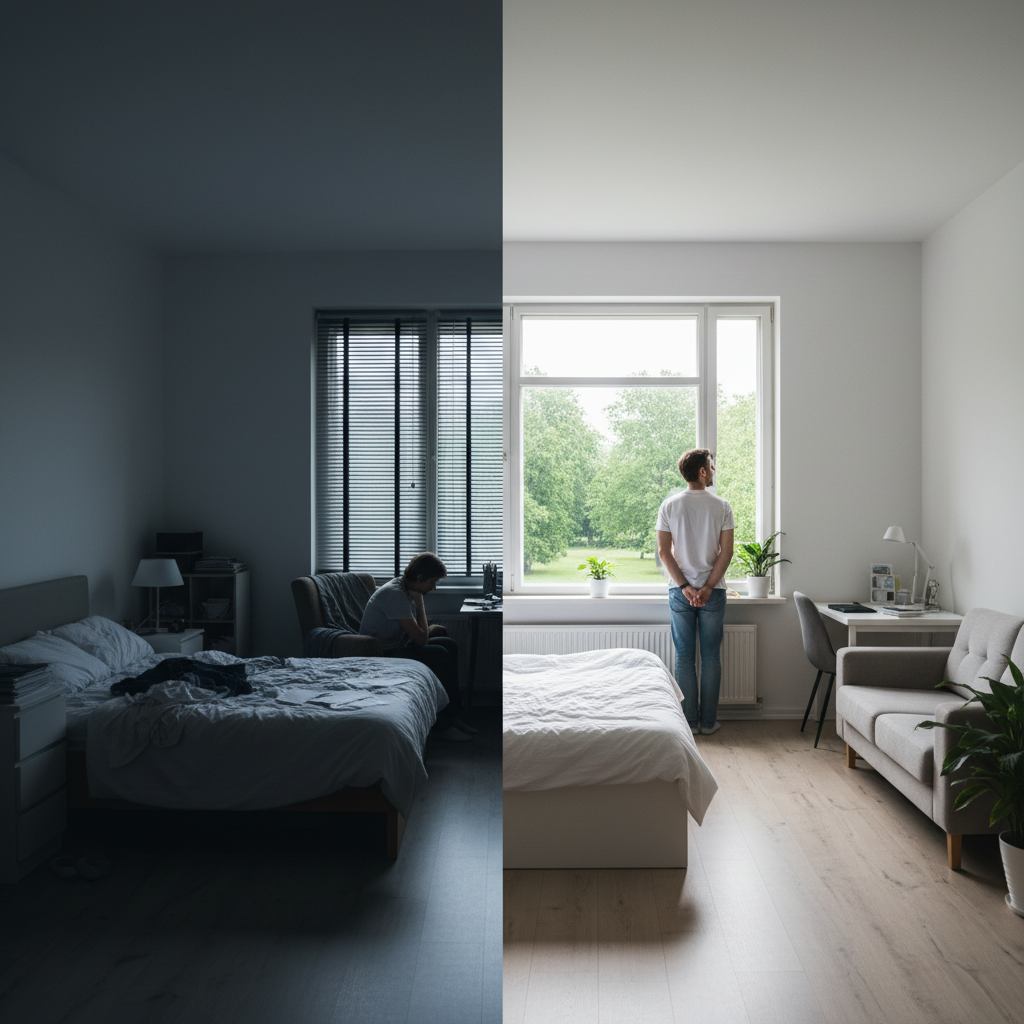
Light & Air
Natural light regulates our circadian rhythm, while fresh air improves oxygenation and mental alertness.
Order & Clarity
Minimizing physical clutter reduces cognitive load, allowing for deeper focus on the task at hand.
Biophilic Elements
Integrating plants and natural materials creates a biological connection that fosters tranquility.
Creating Functional Zones
Another key strategy is the creation of distinct "zones" for different activities. When we use the same space for work, eating, and relaxation, our brains can become confused, making it difficult to fully engage in or disengage from these activities. By dedicating specific areas to specific functions, we create environmental triggers that help us transition between states of productivity and rest. Even in small living spaces, these boundaries can be established through the use of lighting, furniture arrangement, or even specific scents.
Ultimately, our environment is an extension of our lifestyle. By taking a proactive approach to designing our spaces, we create a supportive framework that enhances our daily routines and contributes to a more balanced and intentional life.